Sewer Drain Cleaning Services - San Francisco Bay Area
If you live in a classic San Francisco Victorian or an East Bay bungalow, your home has undeniable character-and likely, a plumbing system that predates the moon landing. While renovation efforts often focus on visible charm, the most critical "room" in the house is the one hidden underground. Our sewer drain cleaning services are built for these aging lines, where preventive sewer cleaning can stop expensive backups before they start.
This infrastructure relies on the "sewer lateral," the pipeline connecting your home's drains to the municipal system. Think of this lateral as a private driveway merging onto a public highway; you are responsible for maintaining the pavement until it hits the city street. Many homeowners only ask what a sewer cleanout is after a disaster strikes, not realizing they own the pipe extending all the way to the city main.
Local regulations confirm that this "property handshake" usually places the entire burden of repair on the homeowner. Between shifting clay soils and invasive tree roots, neglecting this boundary can quickly turn a slow drain into a major excavation project. Before panic-searching for a sewer company, knowing the mechanics of your lateral is the best way to prevent a costly emergency.
How to Find Your Sewer Cleanout Before an Emergency Hits
Imagine a plumber arriving at your doorstep with the meter running, only to spend the first hour searching for an entry point into your system. This access point, known as the sewer cleanout pipe, is essentially the "front door" to your plumbing, allowing professionals to clear blockages without dragging heavy equipment through your living room. You are looking for a pipe, usually 3 to 4 inches wide, topped with a threaded cap made of brass, iron, or white plastic.
Locating this cap depends heavily on when your home was built and its layout. For many Bay Area properties, determining the sewer cleanout location requires checking these prime spots:
- Near the Foundation: An outdoor sewer cleanout is often found within a few feet of the house exterior, sometimes hidden by bushes.
- The Garage Floor: Look for a flush circular cap embedded in the concrete near a wall.
- The Sidewalk or Driveway: Small metal covers marked "S" or "CO" often protect the pipe near the street.
- The Crawl Space: In raised-foundation homes, the access point may be underneath the floorboards.
If you are still asking how to find your sewer cleanout after checking these areas, it might be buried under years of landscaping or paved over during a renovation. Keeping this cap visible and accessible is vital; otherwise, plumbers may have to remove a toilet to access the line, significantly increasing labor costs. With the location identified, you are ready to monitor the system for the 3 red flags that your sewer line is approaching a breaking point.
3 Red Flags That Your Sewer Line Is Approaching a Breaking Point
While a slow kitchen sink is annoying, it usually only affects that specific fixture. A main sewer line blockage, however, threatens the entire "trunk" of your plumbing tree. Because every drain in your home eventually feeds into this single pipe, a deep blockage forces water to seek the path of least resistance-usually backing up into the lowest point in the house, such as a shower floor or basement drain.
Watch for these specific indicators that differentiate a simple clog from a system emergency:
- Water Migration: If flushing the toilet causes water to rise in the shower, or running the washing machine causes the toilet to overflow, the main line is choked.
- The "Death Gurgle": Bubbling sounds coming from adjacent fixtures when a drain is used indicate trapped air fighting against a blockage.
- Persistent Odors: A smell of sewage in the yard or basement often signals a breach where gases are escaping before liquid waste appears.
In the Bay Area, common causes of sewer backups in old homes rarely involve simple debris. Instead, aggressive tree roots infiltrate clay pipes, or soil shifts create "offsets"-jags in the pipe alignment that catch waste. Ignoring these warning signs of a collapsed underground pipe results in catastrophic damage. Before you attempt to unclog sewer lines blindly, recognizing the signs you need a professional sewer camera inspection is vital. Once the scope confirms the culprit, you face a critical choice: Hydro-Jetting or Snaking?
Hydro-Jetting vs. Snaking: Which One Saves Your Pipes?
For simple blockages, the mechanical auger (or "snake") is effective at punching a hole through the obstruction. However, snaking is like plowing a single lane through deep snow; traffic moves, but the messy banks remain on the sides. Conversely, modern sewer and drain cleaning machines capable of hydro-jetting use high-pressure water to scour the interior walls, restoring the pipe to nearly its original diameter.
When weighing hydro-jetting vs snaking for main lines, tree roots are often the deciding factor. A snake merely tears through the root mass, leaving jagged ends that quickly catch new debris. Jetting acts as a liquid blade, slicing roots flush against the pipe wall and blasting away years of grease. Because this process is so thorough, the frequency of routine main line descaling drops significantly, effectively "resetting the clock" on your system's maintenance.
Resist the urge to use harsh chemical sewer drain cleaning products as a shortcut. In older homes, the heat generated by these caustic reactions can crack brittle cast iron, turning a simple clog into a structural failure. Preserving your pipe's integrity is crucial not just for function, but for passing the inspections required by San Francisco and East Bay Sewer Lateral Ordinances.
Navigating San Francisco and East Bay Sewer Lateral Ordinances
In most of the state, determining who is responsible for sewer lateral maintenance in California is clear: the homeowner owns the pipe from the building to the city main. However, local rules often distinguish between the "upper lateral" (house to curb) and the "lower lateral" (curb to street), creating confusion about repair liabilities. Generally, if your upper lateral fails, the city may still hold you accountable for the entire line's integrity to prevent groundwater contamination.
To protect the Bay from leaks, agencies like EBMUD require a PSL Certificate during specific life events. Homeowners must prepare for a mandatory sewer lateral inspection in the Bay Area if they trigger these conditions:
- Buying or selling a property.
- Initiating a remodel valued over $100,000 (or as low as $25,000 in specific zones).
- Requesting an upsizing of the water meter.
San Francisco operates differently, often flagging issues during permit applications or observed system failures. Ignoring SFPUC sewer lateral compliance requirements can result in a "Notice to Repair," forcing you to fix defects under a strict city deadline. Although the cost of sewer lateral inspection in San Francisco is a minor upfront expense, it protects you from the financial shock of emergency construction.
The Real Cost of Sewer Cleaning and How to Prevent the $10,000 Surprise
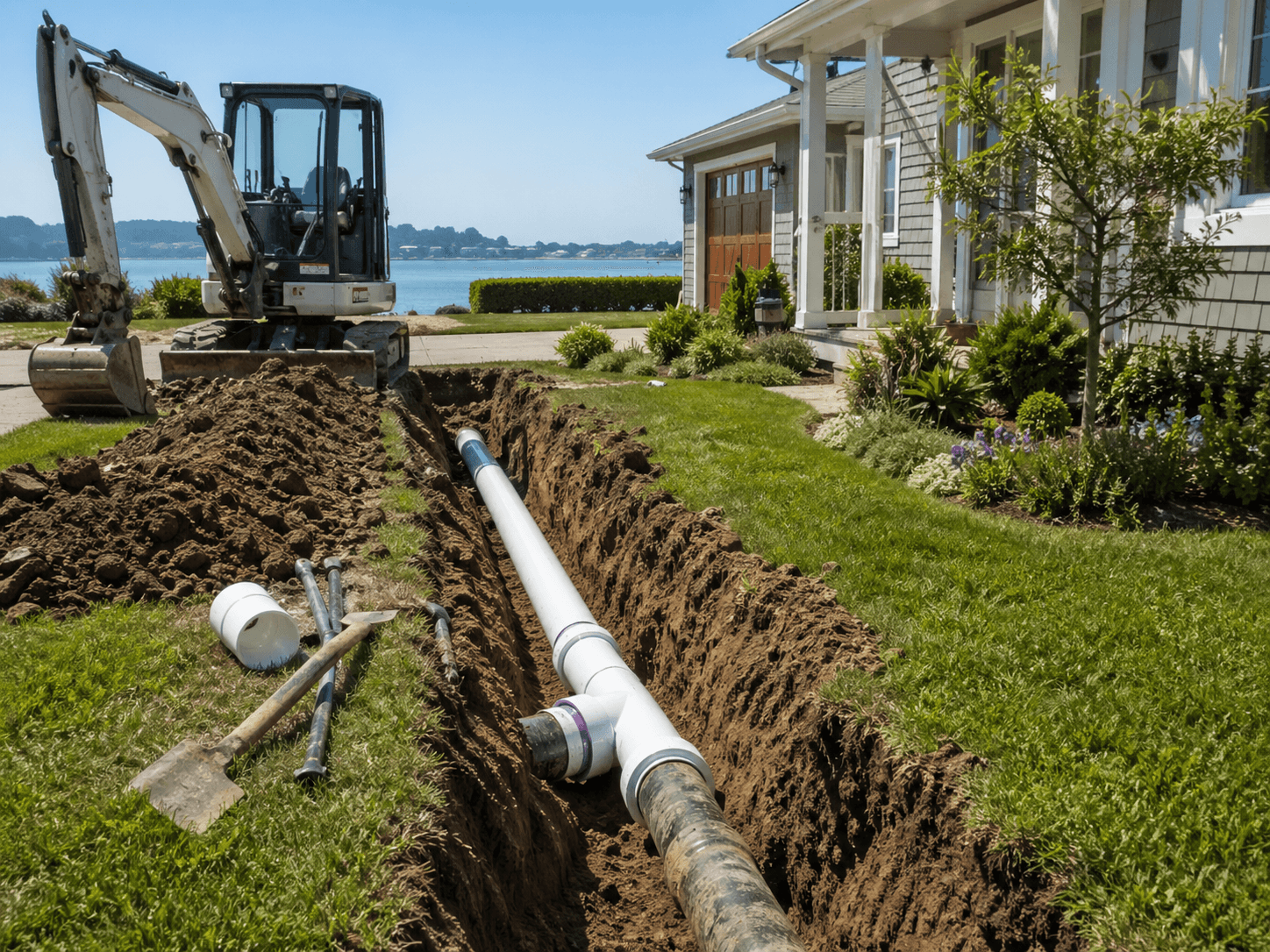
While a standard snaking job is affordable, homeowners often panic when asking how much it costs to unclog a sewer line, only to discover the pipe itself has collapsed. In the past, this meant excavators tearing up your front garden, but modern methods like pipe bursting (pulling a new pipe through the old one) or epoxy lining offer a less invasive alternative. Trenchless sewer pipe replacement benefits include preserving your landscaping and driveway, often completing the job in a single day rather than a week of messy construction.
This non-invasive approach is a game-changer for sewer line repair for apartments, where traditional excavation would block tenant access or destroy parking areas. Similarly, preventative maintenance for Bay Area hillside properties is essential, as shifting soils exert constant pressure on rigid clay pipes, creating offsets that standard cleaning cannot fix.
To avoid the shock of a five-figure repair bill, adoption of a strict maintenance routine is your best financial defense:
- Schedule an annual camera inspection to spot offset joints before they break.
- Identify aggressive tree roots (like Eucalyptus) near your lateral path.
- Install a two-way cleanout to allow full-access cleaning from the exterior.
- Eliminate grease and "flushable" wipes from your disposal habits.
Your Roadmap to a Backup-Free Home in the Bay Area
You have moved from viewing your plumbing as a hidden mystery to understanding it as a critical system, especially given our region's shifting soil and steep grades. Instead of waiting for a backup to disrupt your life, you now possess the insight to distinguish between a minor drainage hiccup and a lateral compliance emergency.
When accidents occur, safety is paramount; knowing how to clean up a sewage spill outdoors requires protective gear and garden lime to neutralize the hazard. For complex tasks like fixing sewer line offsets or navigating municipal codes, verify that local sewer contractors hold specific local experience. Choosing the right sewer service means finding partners who understand Bay Area geology, not just general plumbing.
Ultimate peace of mind comes from visibility. Committing to a camera inspection every few years transforms your maintenance strategy from reactive panic to planned prevention, keeping your home a sanctuary rain or shine.
For related main-line options, compare hydro-jetting and sewer camera inspection services, or call us for same-day sewer cleaning triage.