When drains keep backing up, people often see three terms: hydroblasting, hydro-jetting, and snaking. They are related, but they are not always the same job type.
Snaking: Fast Access, Narrow Clearing
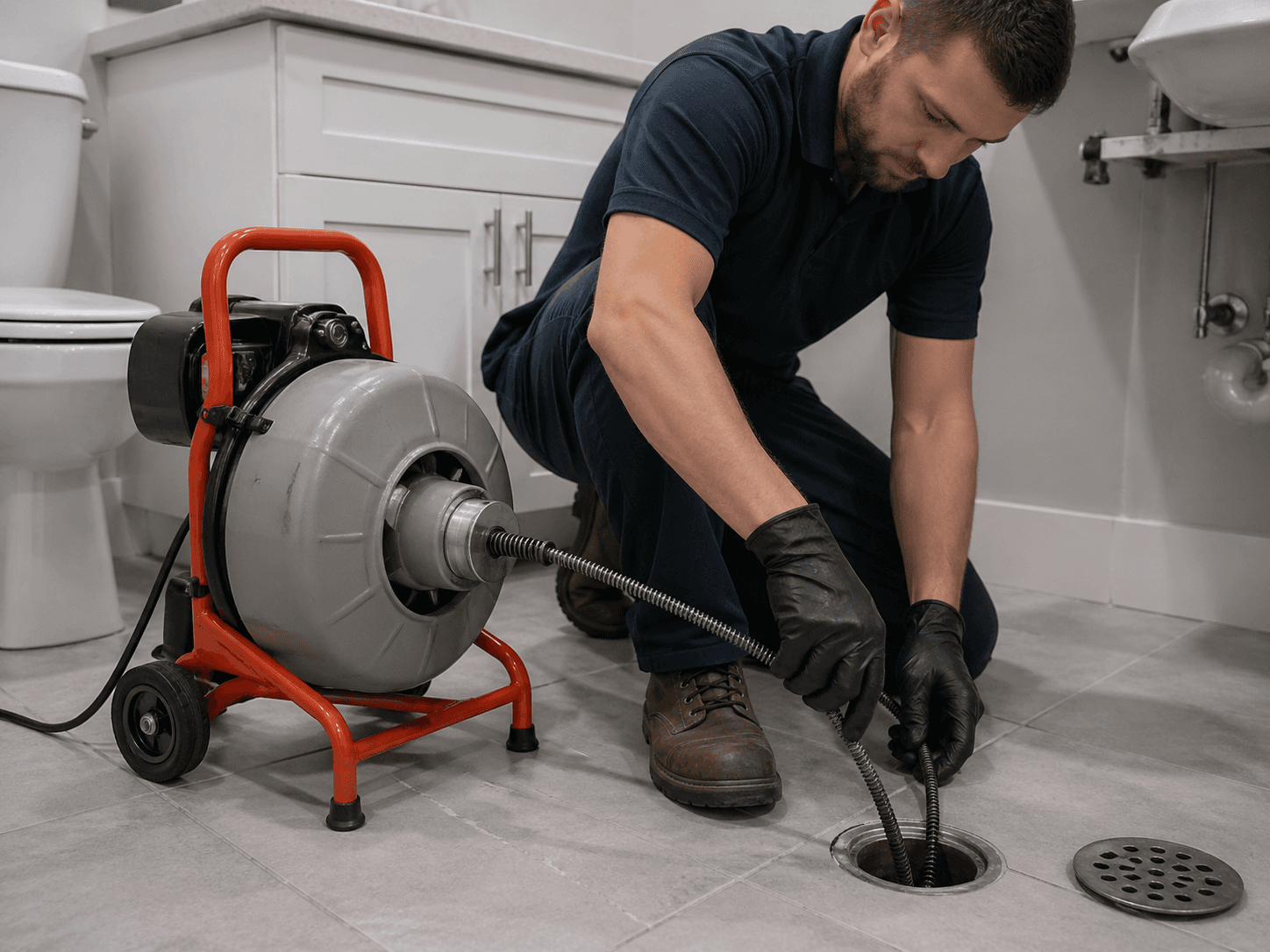
Snaking uses a cable and cutting head to break through obstructions. It is often the fastest low-cost way to restore flow when one fixture or one section is blocked.
Best when:
- You need immediate relief from a localized blockage
- Pipe condition makes high-pressure cleaning risky
Hydro-Jetting: Deep Sewer and Drain Cleaning
Hydro-jetting uses controlled high-pressure water to remove grease, sludge, and buildup across the full pipe wall. It is often the stronger long-term option for recurring sewer and drain issues.
Best when:
- You have repeat clogs
- You need full-line cleaning, not just a hole through blockage
- You want post-cleaning camera verification
Hydroblasting: Broader Industrial Term
Hydroblasting is a broader term often used in industrial/commercial cleaning contexts. In residential plumbing conversations, people usually mean hydro-jetting when they say hydroblasting.
Best when:
- You are discussing commercial-heavy cleaning scenarios
- You need to clarify service scope before booking
Quick Decision Guide
- One urgent clog: start with snaking
- Recurring main-line issues: hydro-jetting is usually stronger
- Unclear condition: run a camera inspection first
Related Services
Choosing the right method early reduces repeat calls and protects older Bay Area piping from avoidable damage.