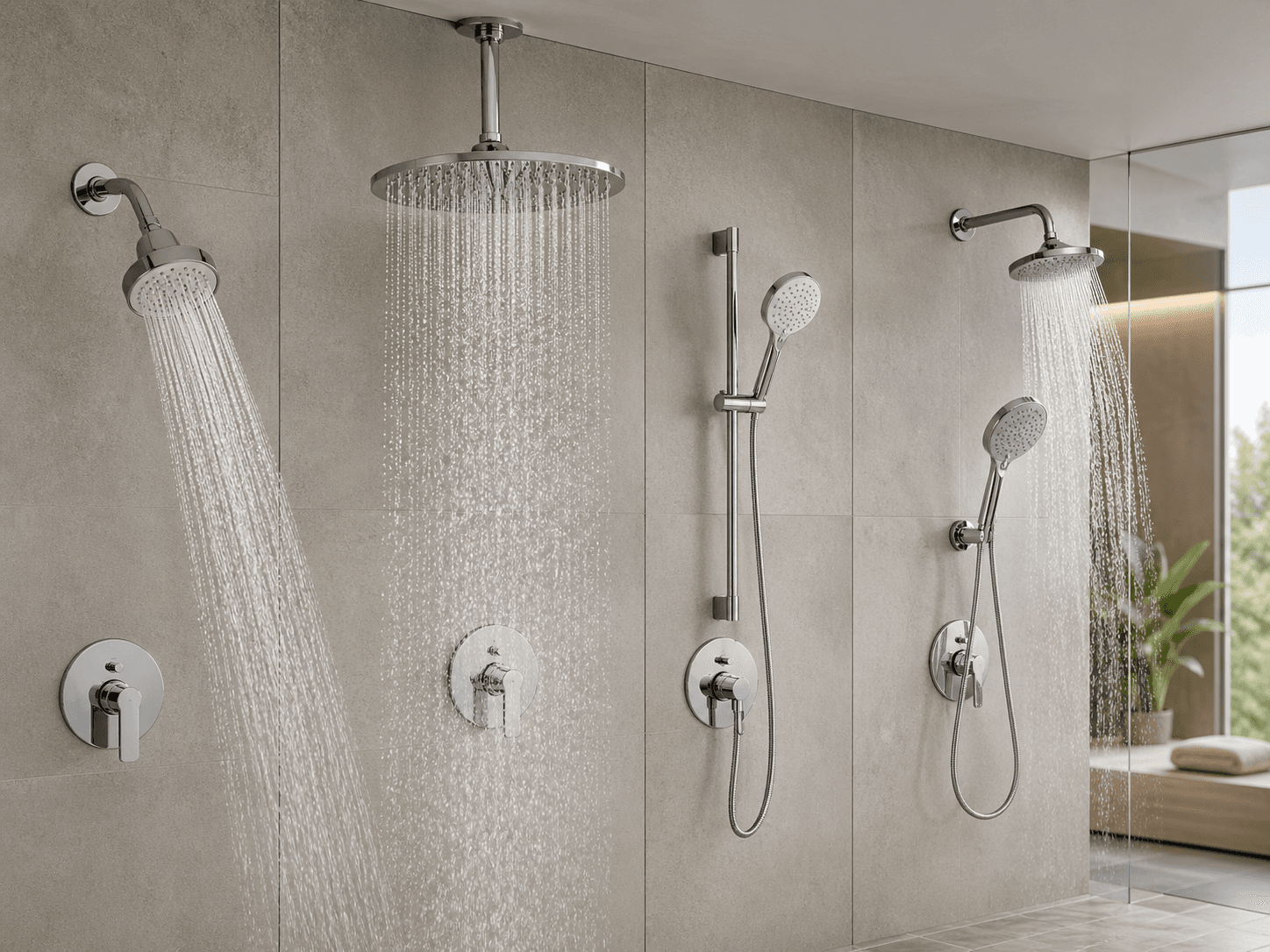
Choosing the right shower head affects comfort, water pressure feel, and long-term maintenance. If you are comparing shower heads with handheld options, double shower heads, rain models, or waterfall styles, your best fit depends on pressure conditions and expected daily use.
What Is GPM in Shower Heads?
GPM means gallons per minute, which tells you how much water flows through the shower head at standard pressure. Many homeowners ask what is GPM on shower head models and how many GPM shower head options are available.
In practical terms, a lower GPM head can save water, while a higher-GPM shower head may feel stronger if pressure and piping support it. Local codes may cap flow rates, so always confirm legal limits before buying the highest GPM shower head you can find.
Can a Shower Head Increase Water Pressure?
A common question is whether a shower head can change water pressure. A shower head cannot raise your home’s supply pressure by itself, but it can improve spray pattern and make pressure feel stronger by changing nozzle design.
If you are searching how to increase pressure of shower, how to turn water pressure up in shower, or how to improve shower head water pressure, start with these checks:
- Clean mineral buildup from nozzles and screen filters
- Verify shutoff valves are fully open
- Inspect pressure-balancing valves and cartridges
- Replace worn or restrictive shower heads with pressure-efficient models
Fixed Shower Heads
Fixed shower heads are mounted to the wall and point in one direction.
Pros:
- Lower cost and simple installation
- Fewer moving parts, which usually means fewer leaks
- Good fit for straightforward bathroom layouts
Cons:
- Limited flexibility for rinsing children, pets, or shower walls
- Less comfortable for users with different heights
Shower Heads With Handheld Options
Handheld models attach to a hose and docking bracket. Searchers often compare phrases like shower with hand shower, shower head with hand held, head shower and hand shower, and best shower head with handheld combo.
Pros:
- Easier cleaning and targeted rinsing
- Better accessibility for people with mobility needs
- Useful for multi-user households
Cons:
- More moving parts can mean more maintenance over time
- Some low-cost hoses wear faster than fixed setups
Rain, Waterfall, and Massager Shower Heads
Rain shower heads and waterfall shower head styles prioritize broad coverage and aesthetic feel. Shower head massager models prioritize focused spray force and targeted muscle relief.
Pros:
- Spa-like comfort and broad water distribution
- Strong style upgrade for modern bathroom remodels
Cons:
- Can feel weak in homes with low pressure
- Some wide-face models need stronger plumbing performance to feel consistent
Double Shower Heads and Extended Arm Configurations
Double shower heads and extended arm shower heads are popular for households that want wider coverage or more height clearance.
Pros:
- Better flexibility for different user heights
- Improved coverage in larger shower stalls
Cons:
- More fittings to maintain
- May expose weak pressure conditions faster than single-head setups
Are Shower Heads Universal?
Most residential shower heads use standardized threading, which is why many shoppers ask whether shower heads are universal. In most homes the connection is compatible, but trim depth, arm angle, and valve performance still affect final results.
Context note: some broad keyword sets also include non-shower terms like faucets bathroom faucets. For this guide, faucets are related bathroom fixture context only; this page remains focused on shower head selection and pressure outcomes.
Quick Buyer Checklist
- Confirm GPM rating and local flow limits
- Match style to your pressure conditions
- Choose handheld or combo setups for flexibility
- Use extended arm or double shower head setups only if your pressure supports them
Related Services
When you match shower head style, GPM, and pressure conditions correctly, you get better comfort and fewer follow-up repairs.